Mechanics
Awaken was produced independently and represents the culmination of six years of self-taught work in Blender. During production, using skills learned solely from YouTube videos, I covered roles typically divided among a full team. Through a constantly evolving workflow, I navigated technical issues without a predefined endpoint. This project totaled over 500 hours and involved modeling more than 50 unique assets, rigging two advanced characters, hand-painting the environment, and much more. Attached is a visual and written breakdown outlining the film’s production pipeline.
-
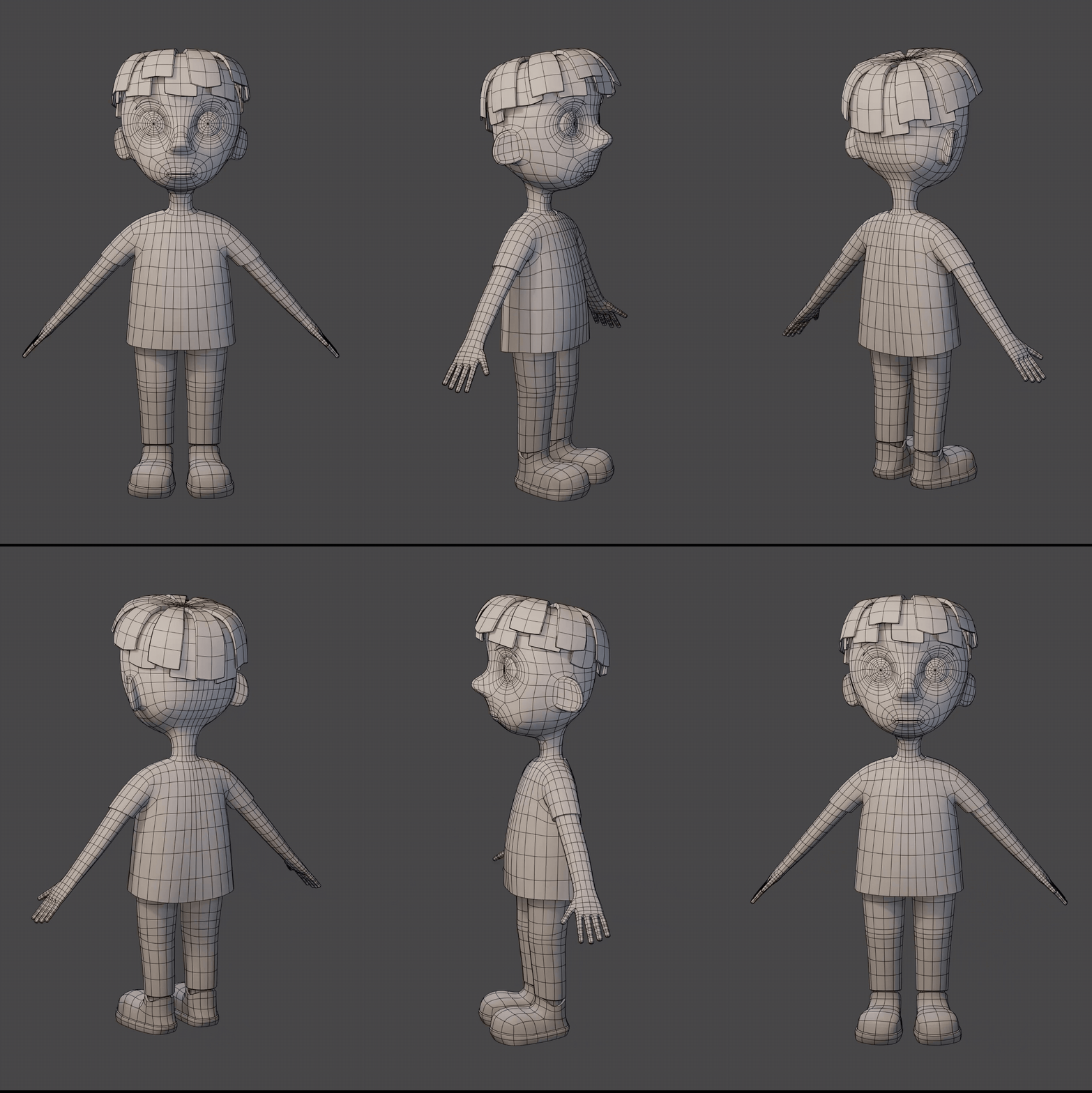
A turnaround of Yung’s 3D character model highlights its precise topology. Topology, or the geometric flow of lines, are critical in the next steps of texturing and rigging.

-
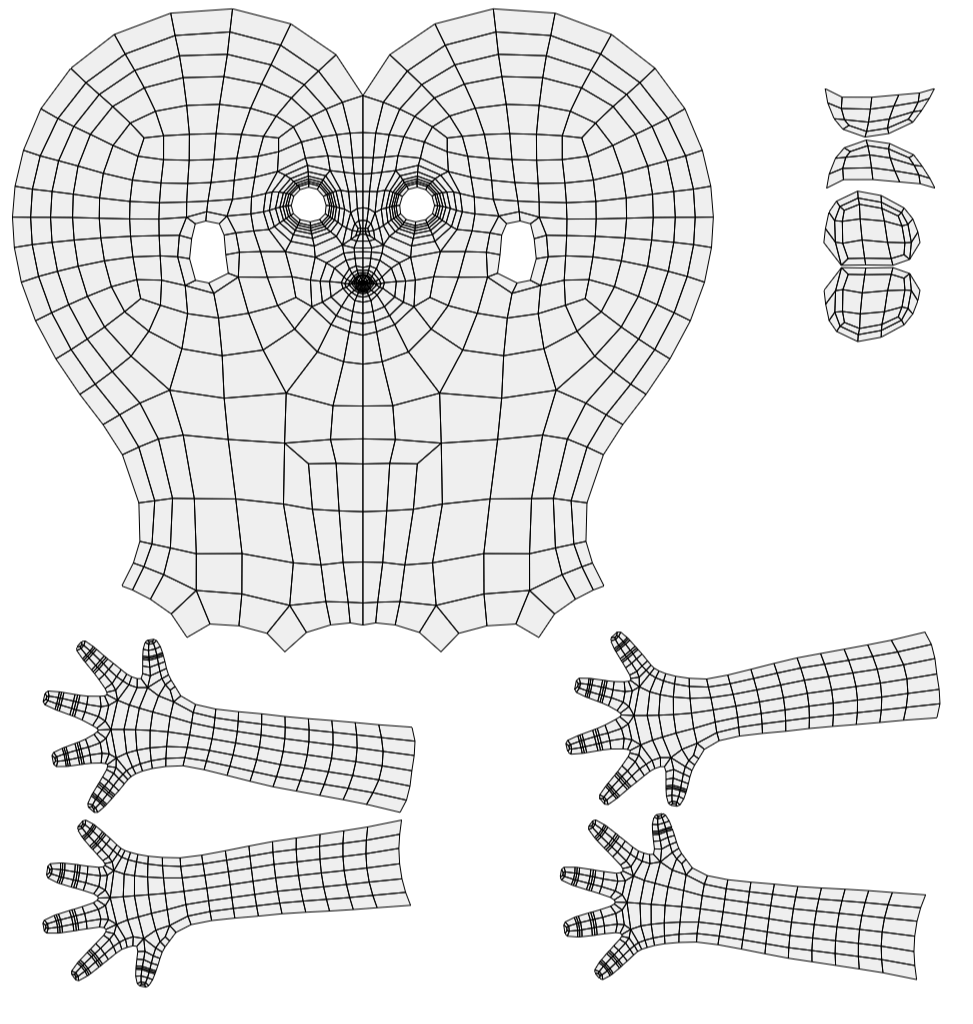
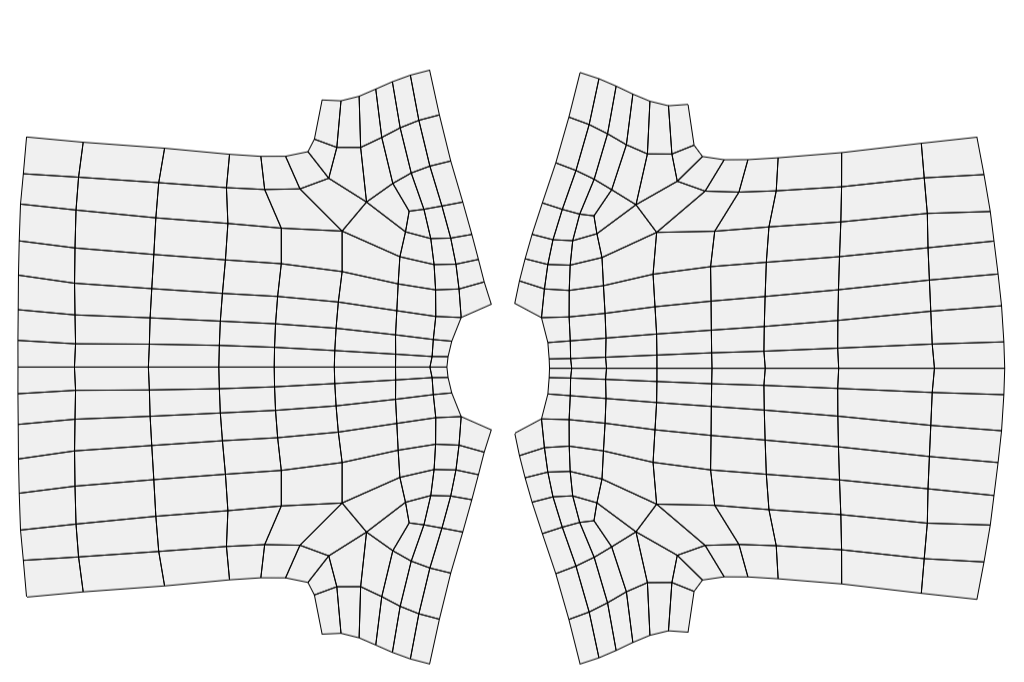
Yung’s UV maps are unwrapped using seams in the mesh. Proper topology allows seams to remain hidden, resulting in a smooth, textured finish.

-
Rig test of Yung’s mouth control, supported by precise topology, allows for smooth and clean facial deformations.
-
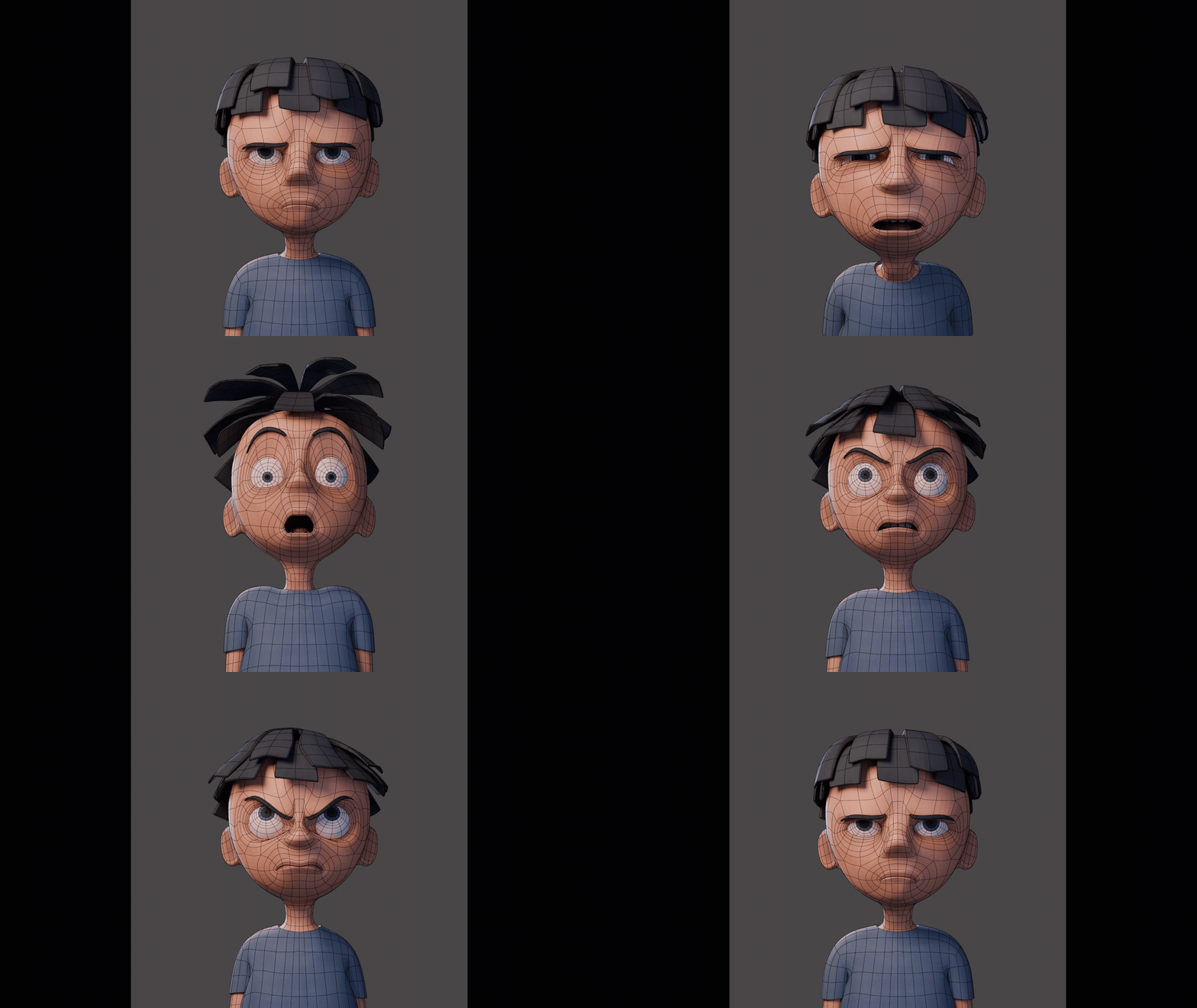
Rig test of Yung’s facial poses supported by torso and shoulder movement helps exaggerate emotion.
-
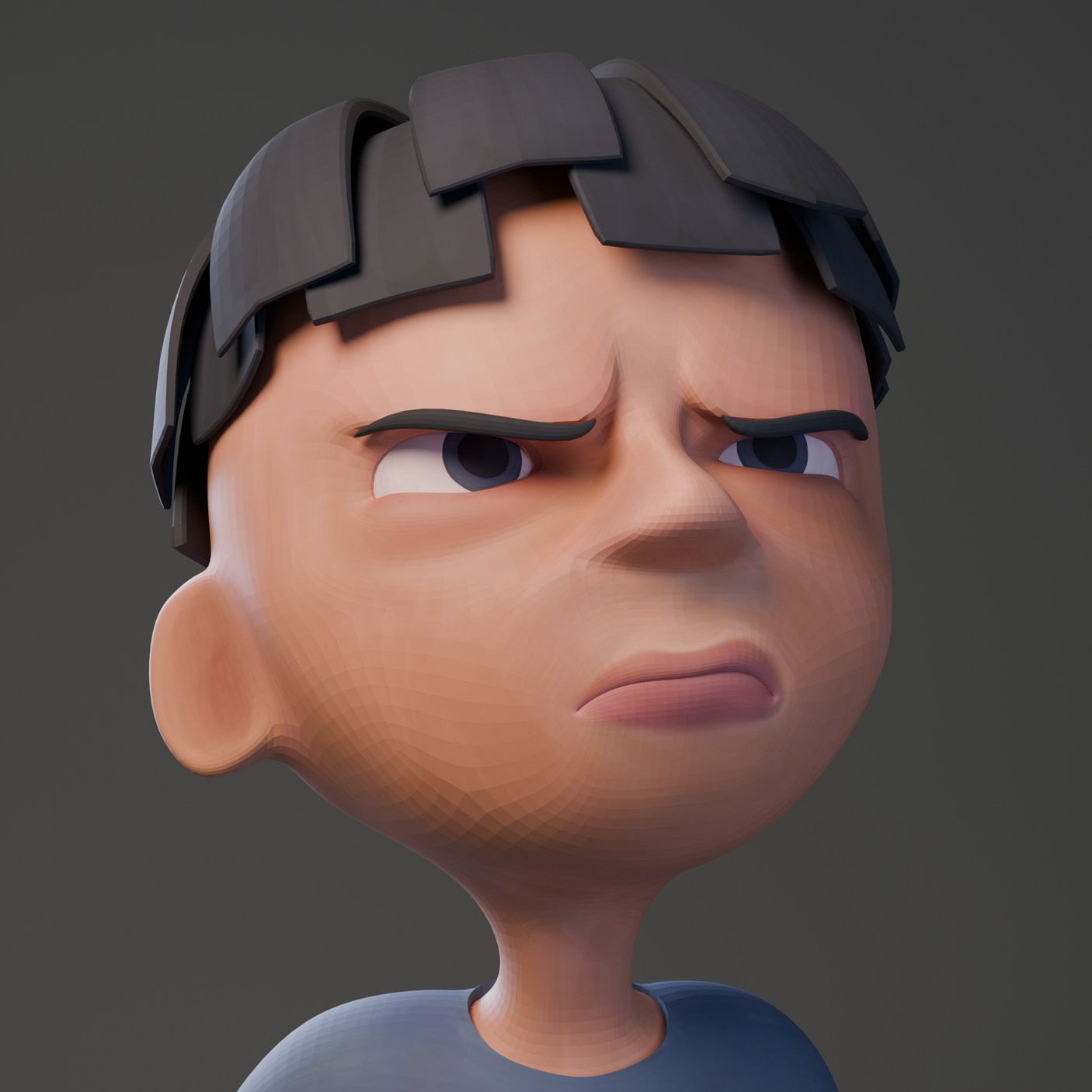
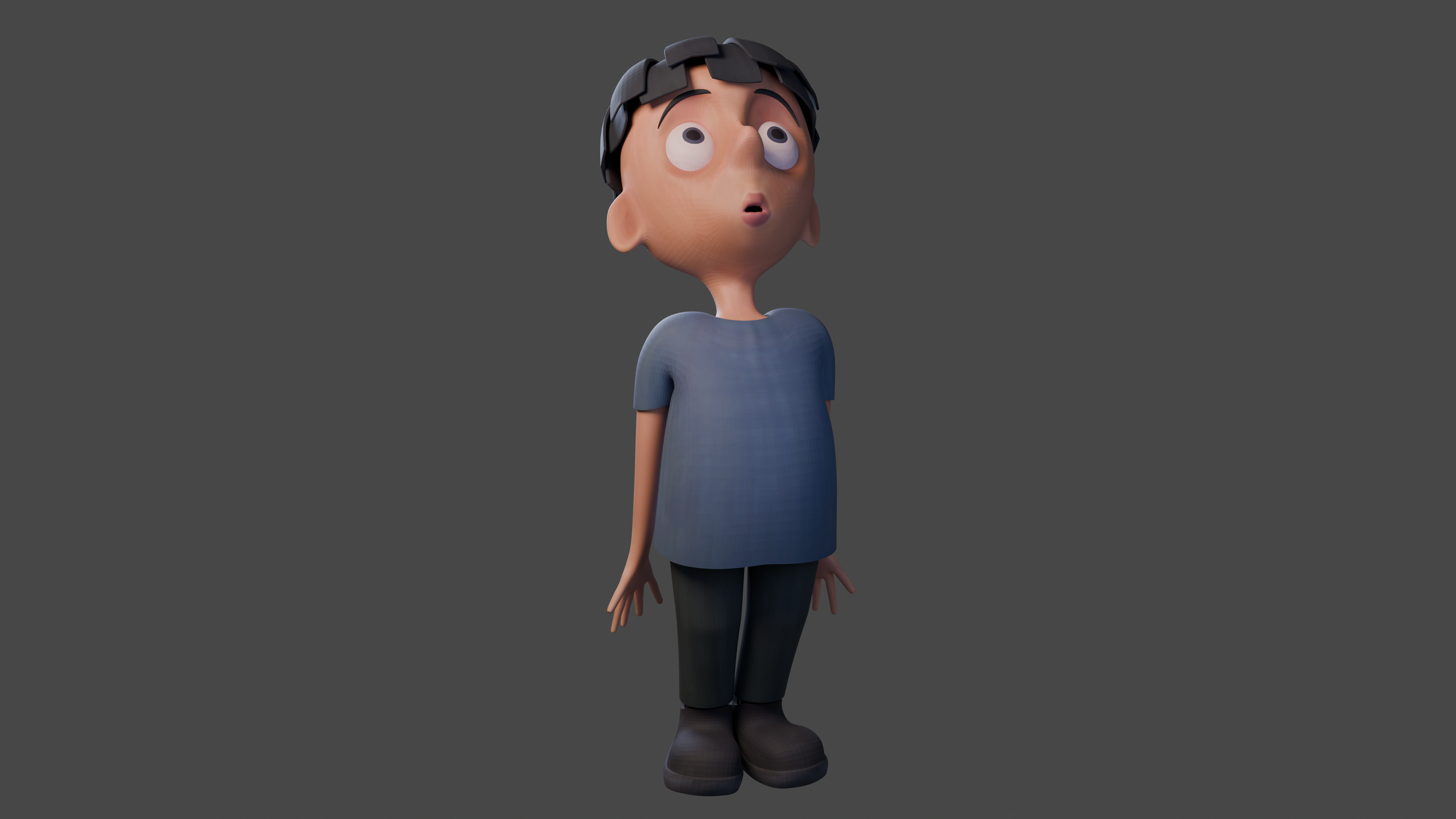
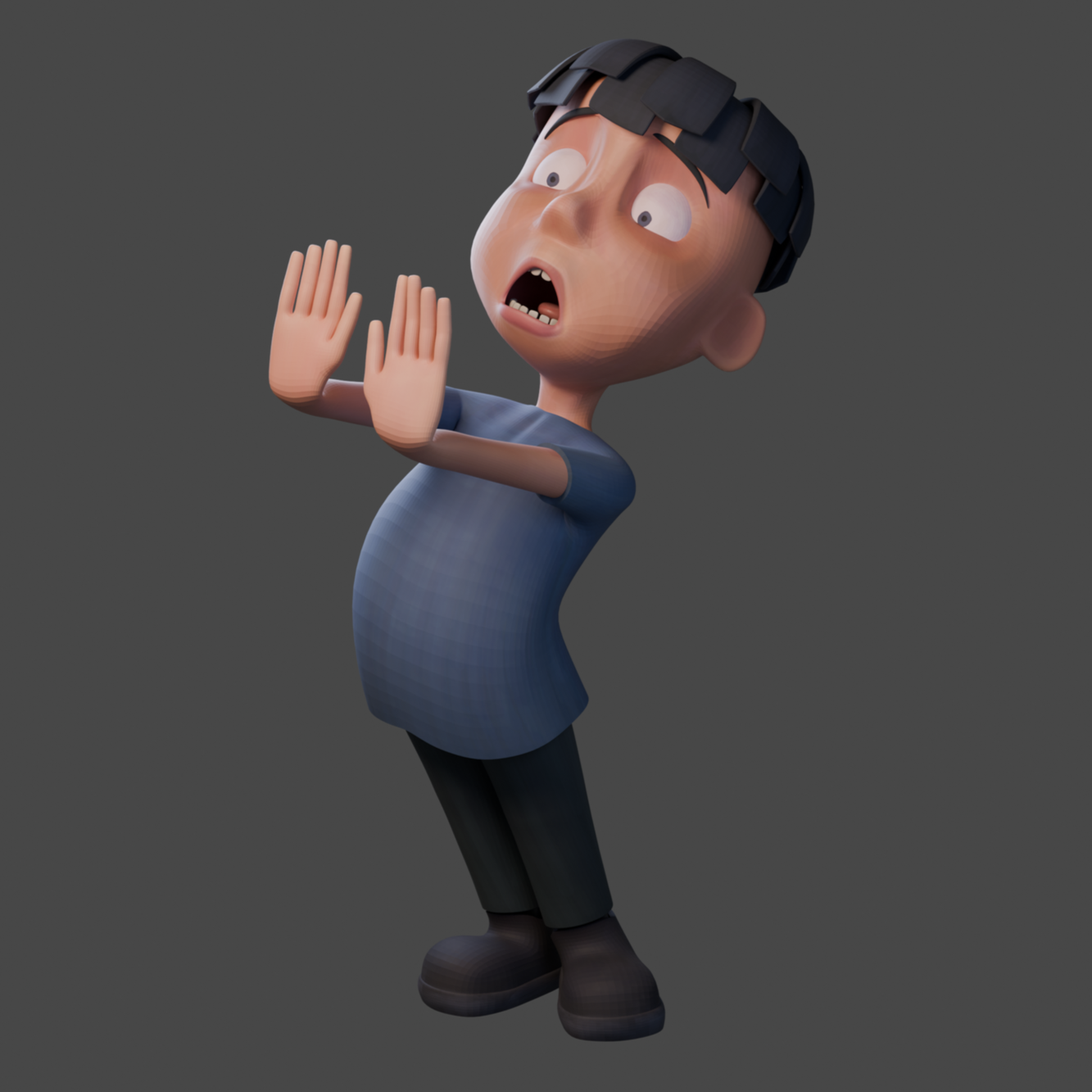
Renders showcase one pose focused on facial expression and others on posture.
-
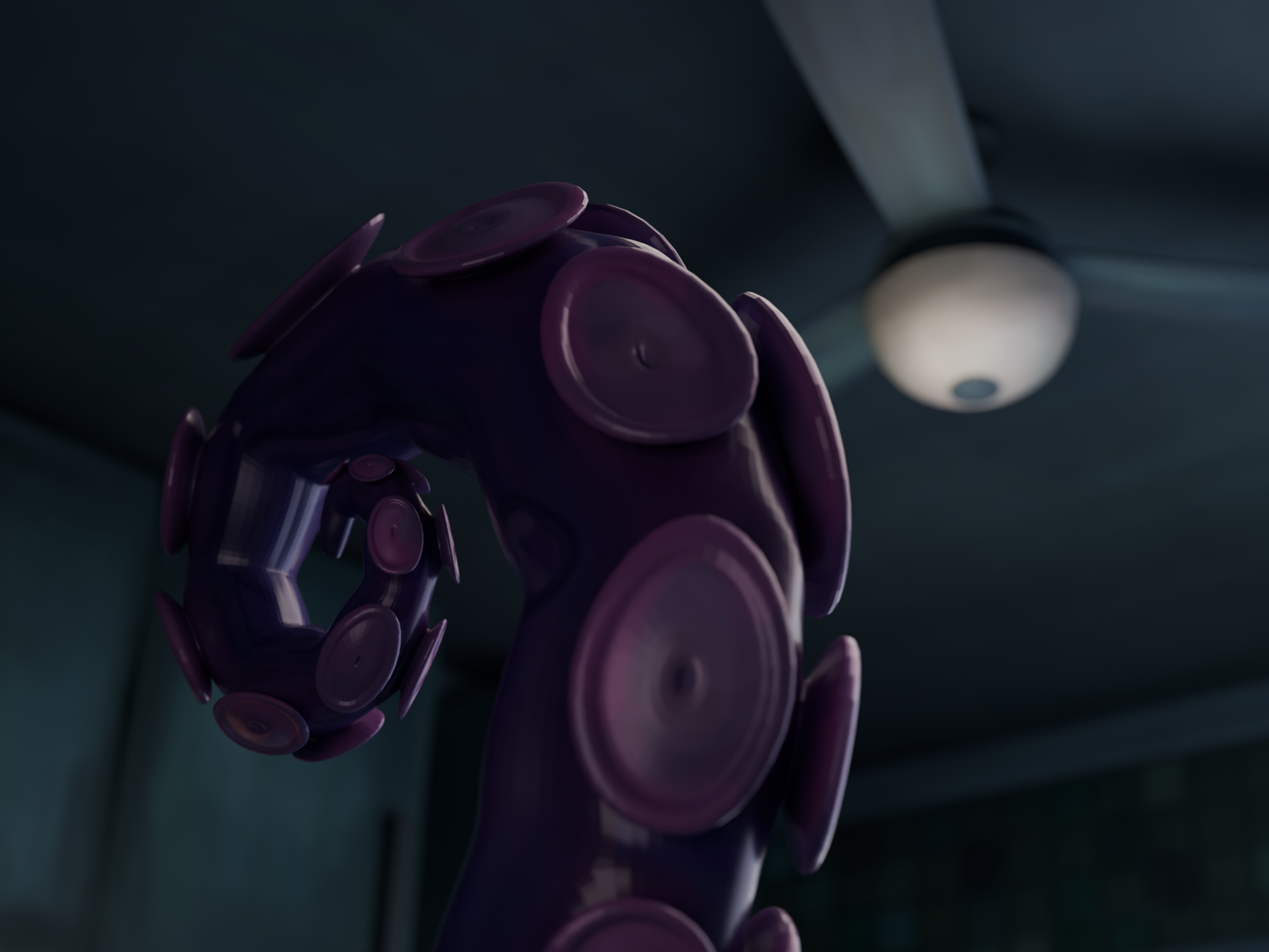
Initial render without lighting.
-
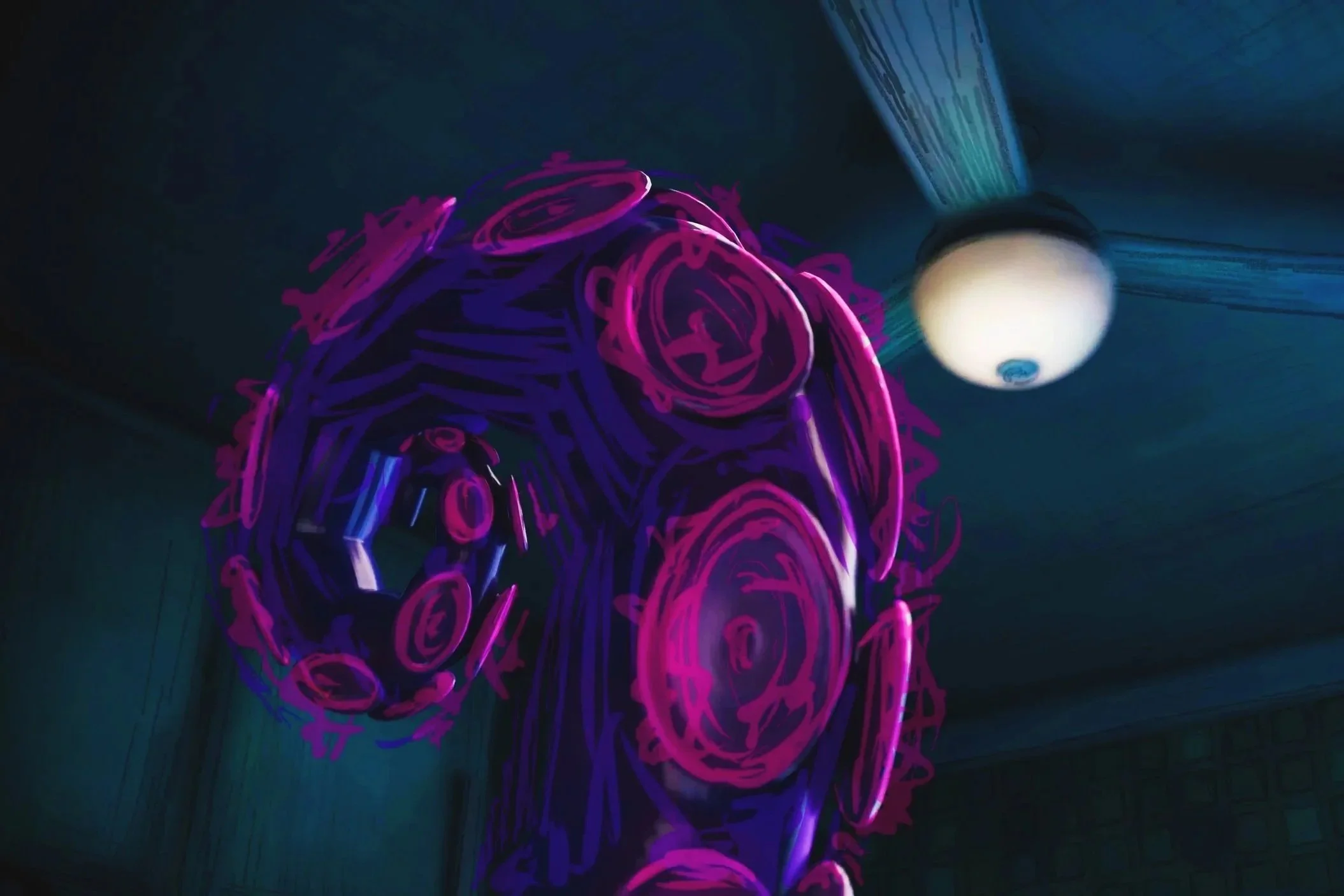
Secondary render introduces lighting and shadows.
-
Final render adds 2D strokes and color correction.
-
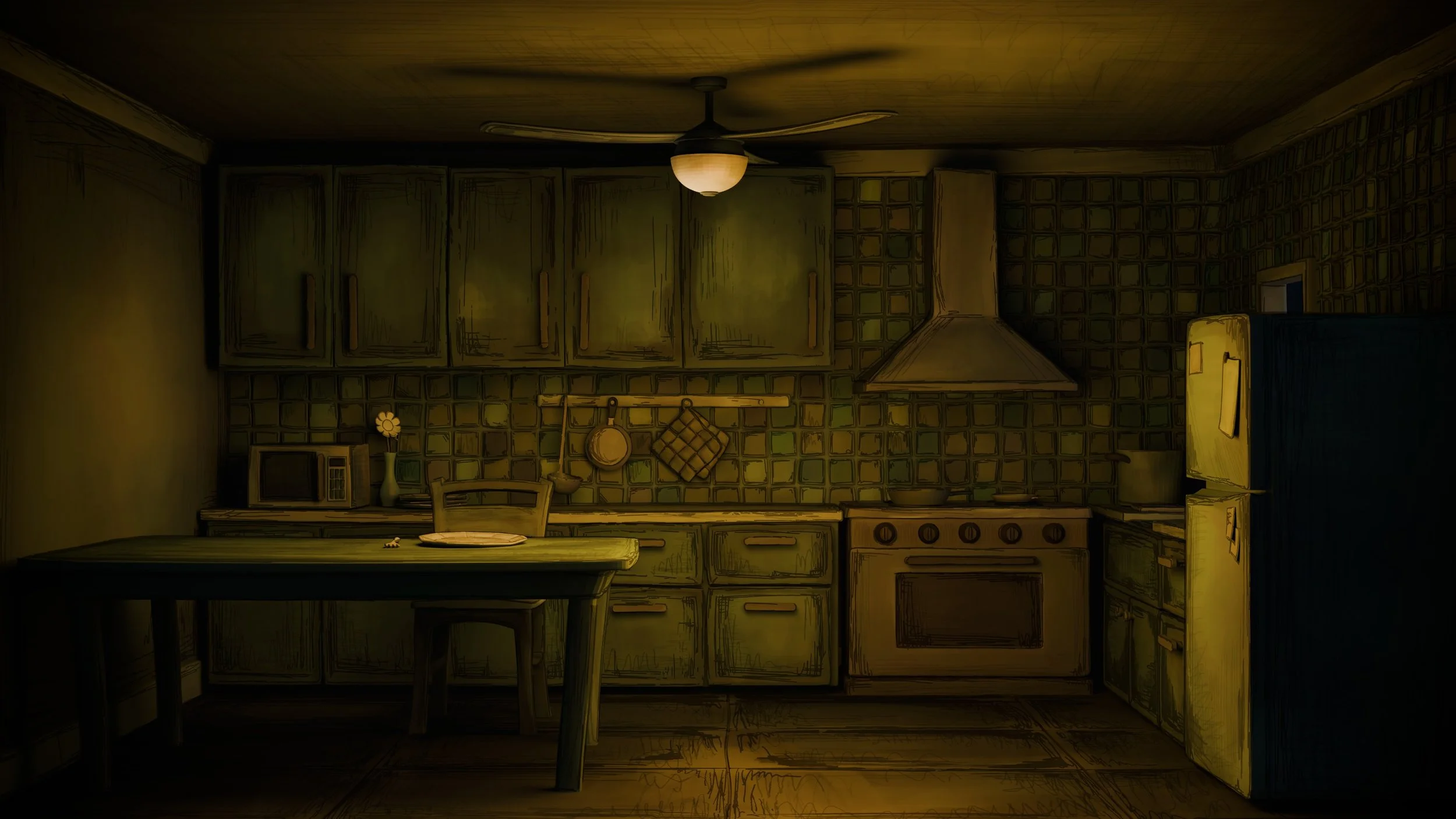
Render of a warm-toned kitchen, highlights each model’s hand painted texture. Combined with 2D strokes, the environment feels worn in and brought to life.
-
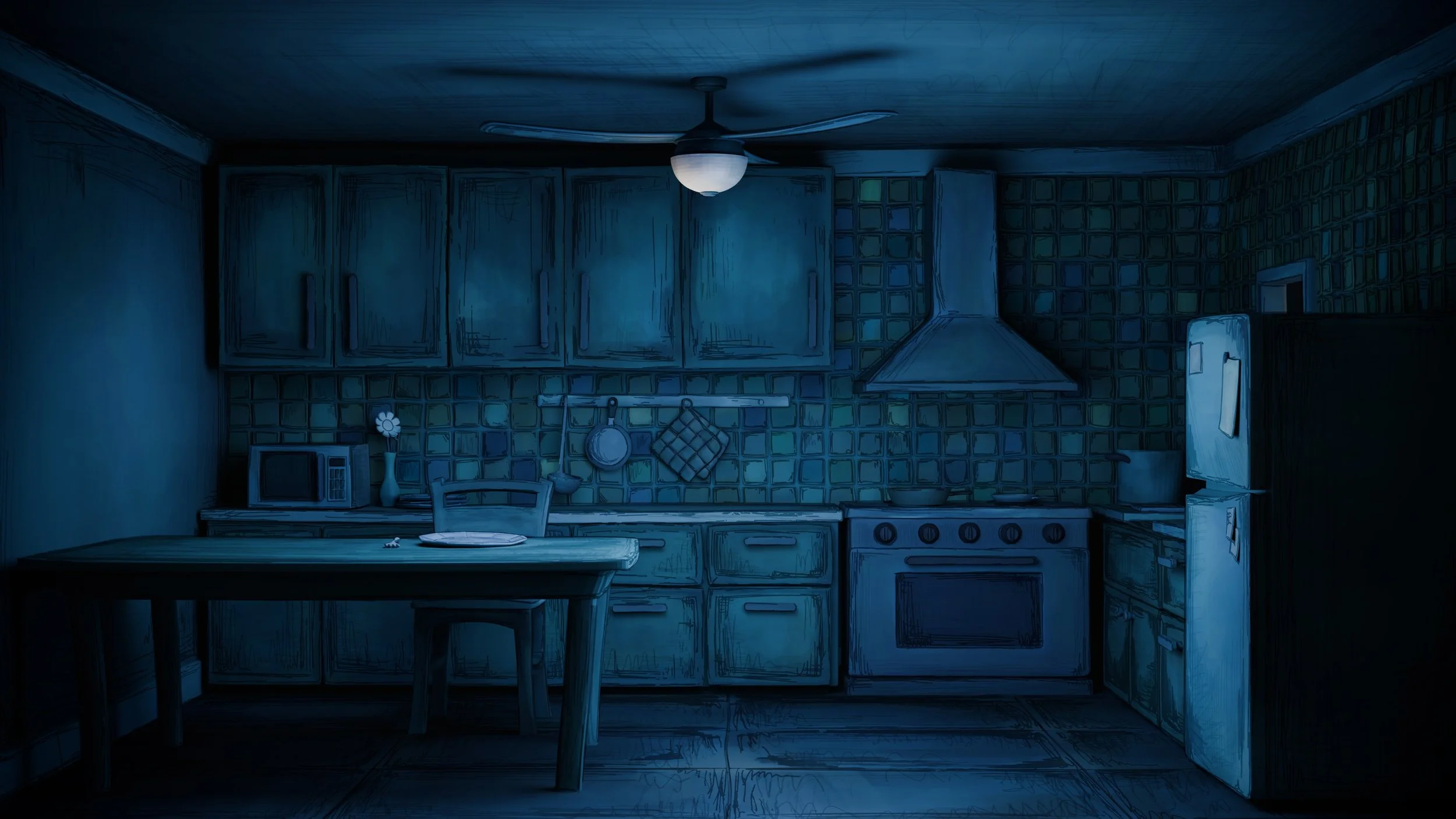
Render of a cool-toned kitchen, highlights each model’s hand painted texture. Combined with 2D strokes, the environment feels worn in and brought to life.
-
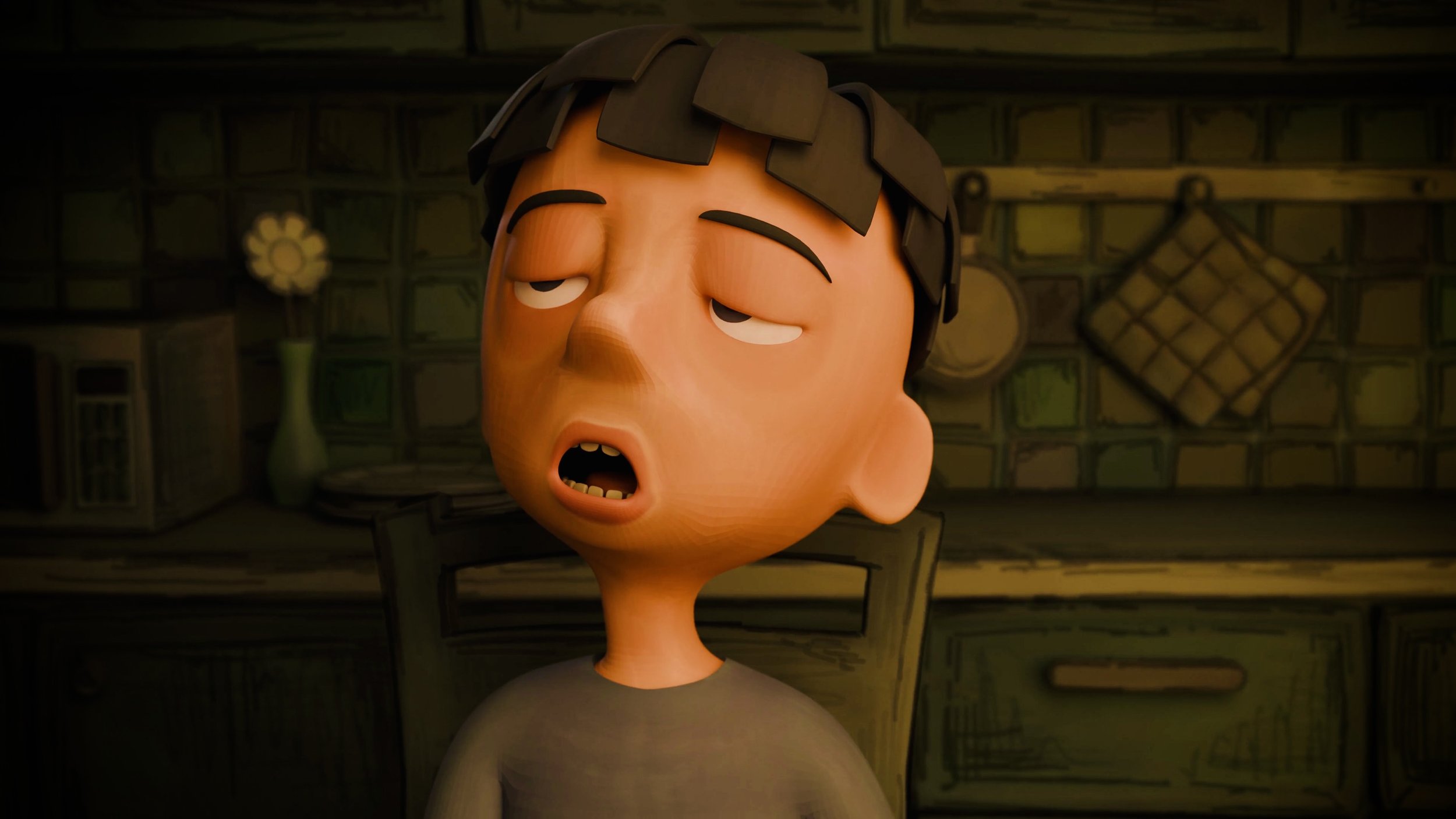
Still frame from the short film highlights the strong pose and warm color composition.
-
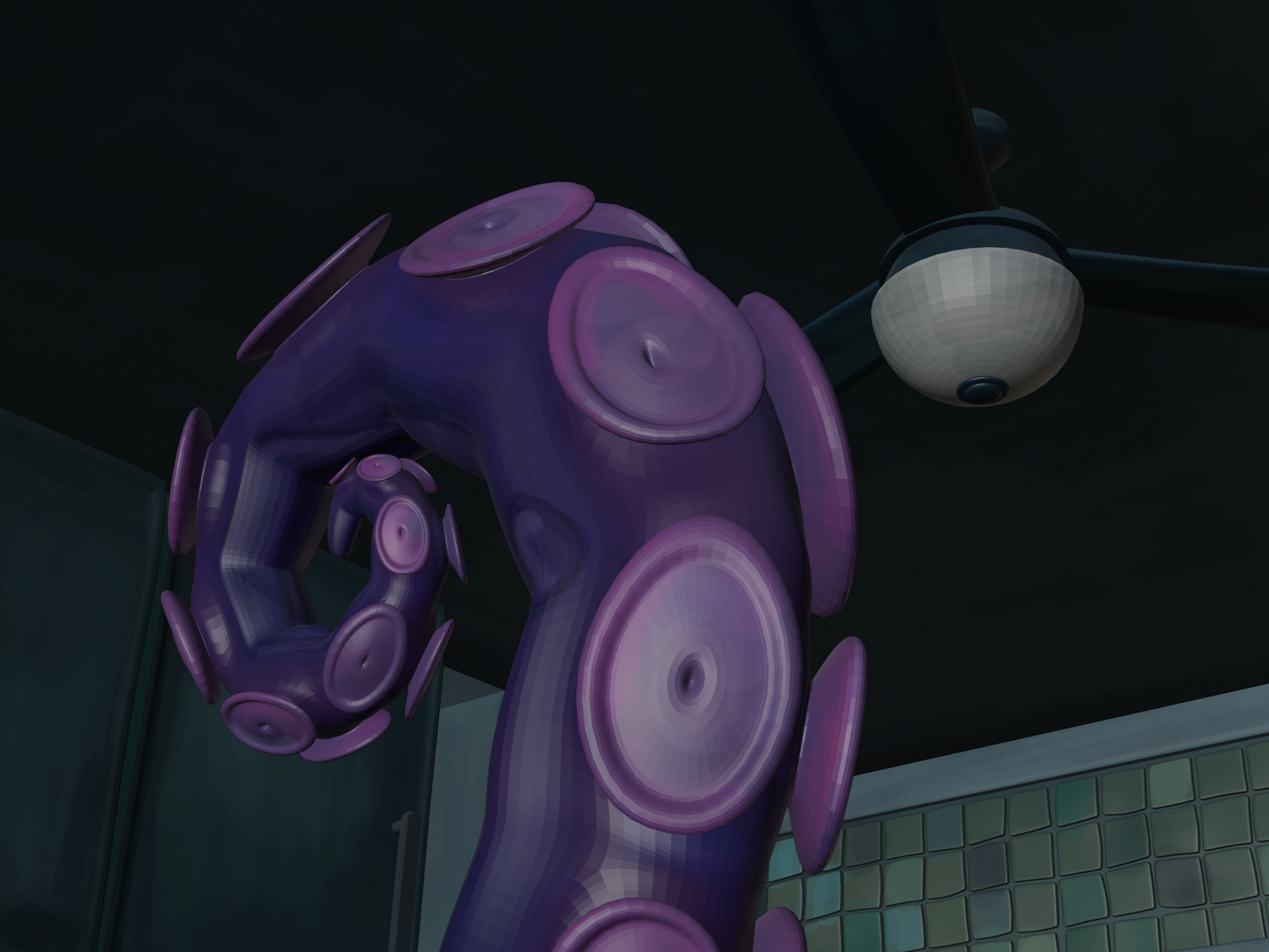
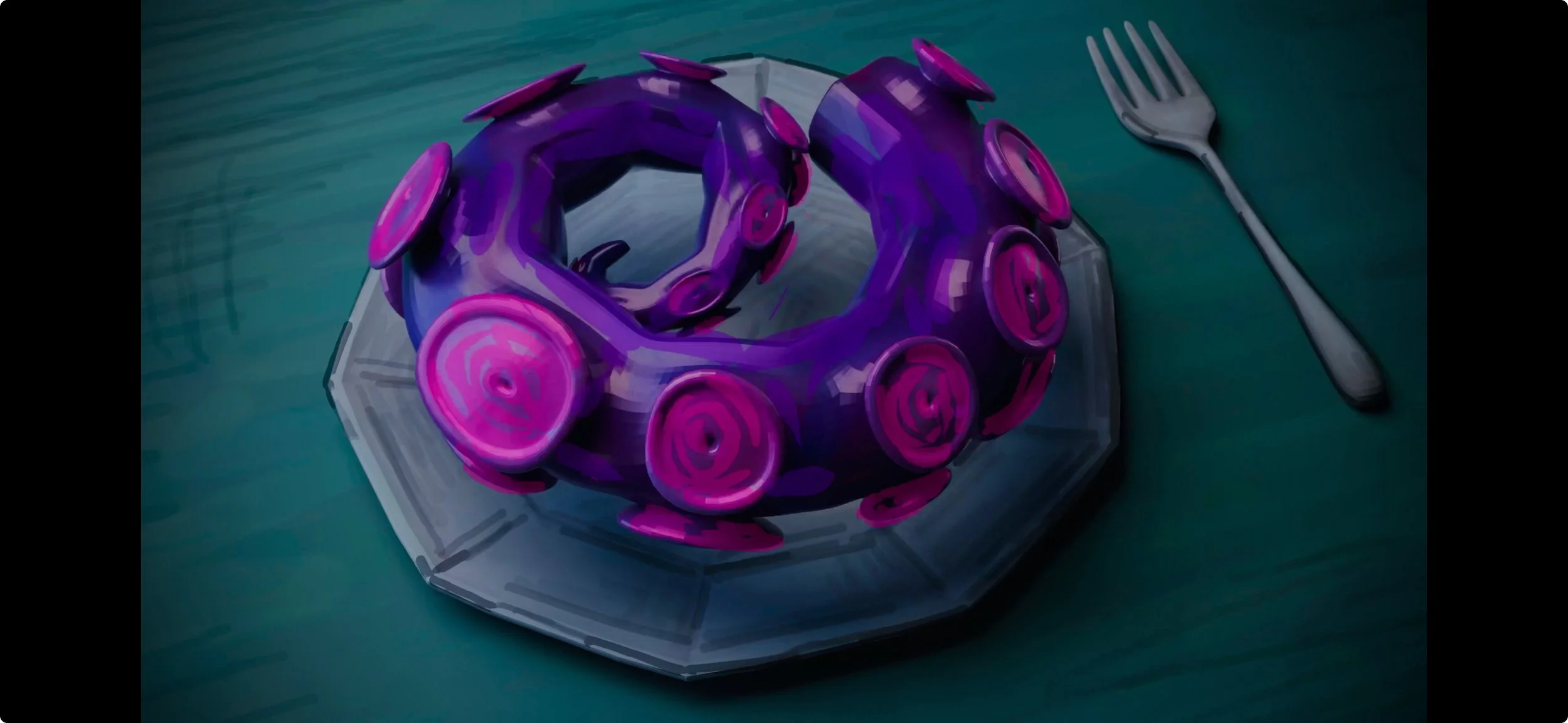
Still frame from the short film reveals the tentacle’s strange nature through a cooler toned composition.
-
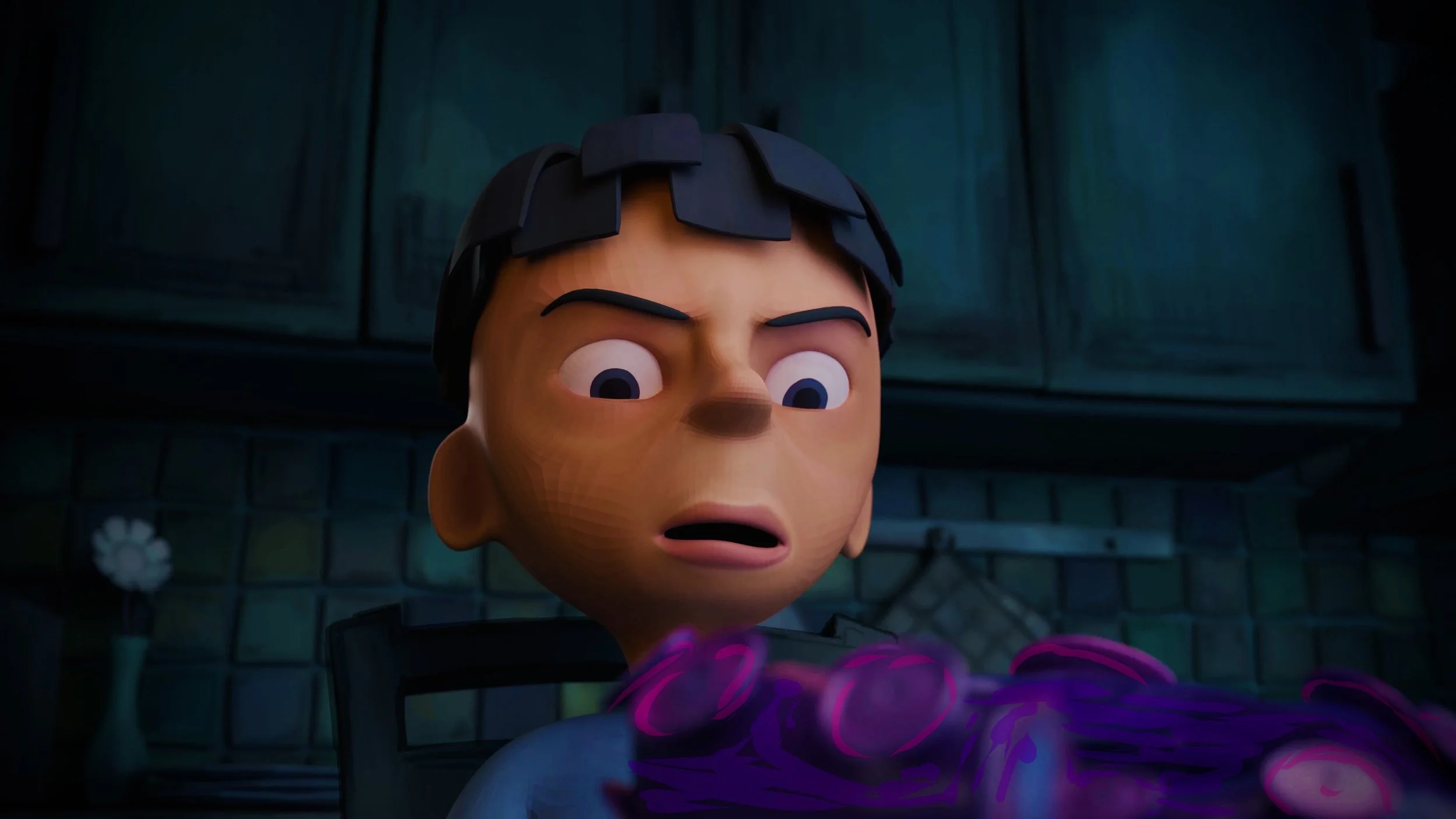
Still frame from the short film demonstrates Yung’s contrast in color, compared to the environment.